 OBSOLETE
The System of Record Was Built on an Assumption Nobody Wrote Down
For fifty years, enterprise software has rested on one belief so obvious it never needed stating: people do the work, and systems record it. That assumption is going obsolete right now — and most organizations are still budgeting as if it isn’t.
Every ERP, every CRM, every ticketing and workflow system ever deployed shares the same silent architecture: a human decides, a human acts, and the system captures what happened. The software was the ledger. The person was the worker. Nobody debated this because there was nothing to debate — it was just how enterprise systems worked, the way water is wet.
Which is exactly the kind of assumption worth being nervous about. The beliefs a business never has to defend are the ones that quietly expire without anyone noticing, and this one is expiring in public, in press releases, on a quarterly cadence.
The signals are not subtle anymore
In April, Oracle announced twelve Fusion Agentic Applications for finance and supply chain — applications that don’t assist with work but execute it, making and carrying out decisions inside business processes with access to enterprise data, approval hierarchies, and transactional context. Oracle’s own framing is telling: the new applications move beyond assistance to execution, autonomously progressing routine work and surfacing only the exceptions where human judgment materially changes the outcome.
Read that last part again. The default is now the machine. The human is the exception handler.
SAP is doing the same thing with Joule and its Business AI stack. Microsoft is embedding agents across Dynamics 365. This isn’t one vendor’s bet — it’s the entire enterprise application market repricing the same assumption at the same time. When every major vendor redesigns their flagship products around the premise that software acts and humans supervise, the old premise isn’t being debated. It’s being deprecated.
The adoption numbers say the interval is already closing
BCG’s research on agentic AI puts adoption at 35% of companies, with another 44% planning to follow. More interesting is what the leading adopters expect to change: 58% anticipate redesigned governance and decision rights, and 45% expect fewer layers of middle management as agents take over workflow coordination.
Sit with that second number. Middle management — the layer whose entire function is coordinating work between the people who decide and the people who execute — exists because of the old assumption. If systems execute, the coordination layer thins out. Nobody is announcing this in an all-hands. It shows up the way these things always show up: a seat that doesn’t get backfilled, a span of control that quietly widens, a role that gets “redefined” in the next reorg. Ordinary, unremarkable signals. Easy to explain away one at a time.
What actually breaks first
Here’s the part the vendor announcements skip. When software recorded work, accountability was simple: the person who clicked the button owned the outcome. The audit trail was a byproduct of human action. Every compliance framework, every approval hierarchy, every control your risk team has ever certified was designed around a human being at the decision point.
When software does the work, that entire accountability architecture is suddenly load-bearing on a foundation that’s no longer there. Who approved the decision the agent made at 2 a.m.? Against which policy version? Can you prove — not assert, prove — that the agent operated within its mandate? BCG’s own guidance concedes the hard part: agentic systems sit somewhere between tools, which are owned and predictable, and people, who are autonomous and need supervision. Every existing governance model was built for one category or the other. These systems are neither.
Most organizations are answering this with dashboards and monitoring — watching what the agents did after they did it. That’s a rearview mirror. The organizations that get this right will be the ones that can constrain and verify agent behavior before execution, the same way they’d never let a new employee sign contracts on day one. The difference between observing autonomy and governing it is the difference between an incident report and a control.
The uncomfortable question
So here’s the version of this worth asking inside your own company: how much of your operating model — your org chart, your controls, your compliance certifications, your software contracts — assumes that a human is the one doing the work?
Not “uses humans.” Assumes humans, structurally, in ways nobody has re-examined because there was never a reason to. That’s your exposure. Not because the agents are coming — they’re already in the products you’re renewing this year — but because everything built on top of the old assumption keeps functioning normally right up until the moment it doesn’t, and by then the interval where you could redesign deliberately has closed.
The system of record isn’t going away. But the thing it records is changing from what your people did to what your systems decided. The organizations that noticed early will have governance for that. The rest will have incident reports.
Sources: Oracle Fusion Agentic Applications announcement (April 2026); BCG, “Leading in the Age of AI Agents: Managing the Machines That Manage Themselves” (2025).
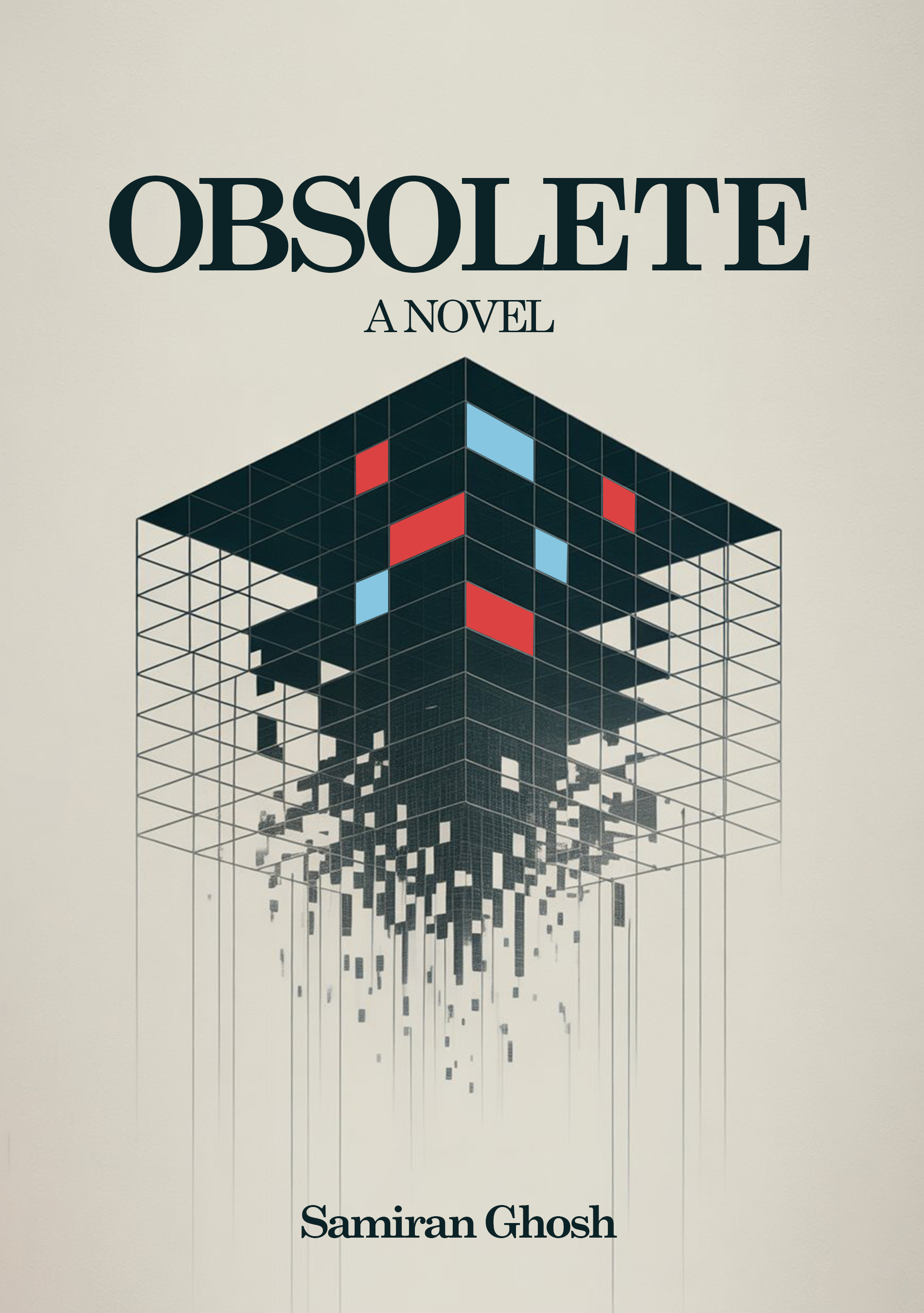
A novel about the assumption going obsolete underneath you.
Read Obsolete