 OBSOLETE
The Assumption That Feels Safest Is the One Already Going Obsolete
Why the belief a business is most confident about is usually the one the market is quietly pricing out — and how to read the interval before it closes.
Every organization is carrying at least one assumption nobody’s checked in years. It’s not in the strategy deck. Nobody defends it in meetings, because nobody’s attacking it — it’s just there, underneath everything else, the thing everyone agreed on so long ago that agreeing on it again never comes up.
That’s usually the one that’s already wrong.
Confidence doesn’t tell you something is true. It tells you how long ago you last checked. A process that hasn’t changed in ten years isn’t necessarily stable — it might just be the thing nobody’s had a reason to look at closely. Same with the org chart that’s outlived three reorgs, or the pricing model everyone still quotes from memory. None of that is proof the thing still works. It’s proof it hasn’t been tested lately.
Markets don’t send a memo when they’ve moved on. Revenue holds. The dashboards stay green. Everyone keeps doing what’s always worked, right up until it doesn’t, and by then it doesn’t look like a warning sign in hindsight — it looks like it came out of nowhere.
The moment the system stops matching the need
There’s a specific kind of moment most companies eventually hit: someone finally admits, out loud, that the system they built doesn’t fit the problem anymore. It rarely shows up all at once. It’s more like a slow accumulation — a workaround that quietly becomes standard practice, an edge case that starts showing up every week, a rule that made sense for a version of the business that doesn’t exist anymore.
The people who catch it early usually aren’t the smartest people in the room. They’re just the ones who keep asking an annoying question: what would have to still be true for this to be the right call? If nobody can answer that with something current — not “it’s always been this way,” but an actual current reason — that’s worth sitting with for a minute.
The gap you can still do something about
Between “this is quietly wrong” and “this is a five-alarm fire” there’s a window. It’s usually longer than people think, and it’s the only period where you get to choose your response instead of just reacting to one. Once that gap closes, you’re not deciding anything anymore — you’re cleaning up.
Reading that window well isn’t a talent. It’s closer to a habit: treating your most confident beliefs like they need re-checking on a schedule, not just when something forces the issue. Most companies don’t have anyone whose job is to do that. They have consensus instead, and consensus is not the same thing, even though it feels similar from the inside. Consensus tends to protect whatever’s already agreed on. What actually helps is something — a person, a process, doesn’t matter — whose whole purpose is to go looking for the assumption that’s aging badly before the market finds it first.
Why nobody wants to be the one to say it
The assumption that feels safest is safest precisely because so much has been built on top of it by now — teams, budgets, entire job descriptions. Questioning it out loud isn’t really a research exercise at that point. It’s a political one. And the people with the most say over whether the question even gets asked are usually the same people whose position depends on the answer staying the same.
That’s the actual mechanism behind most obsolescence stories. It’s rarely that a company was too slow or too dumb to see it. It’s that the incentives rewarded confidently repeating the old answer for a lot longer than they should have.
A more useful question to ask yourself
If you want to find the assumption in your business that’s already going obsolete, don’t start with “what’s changing out there.” Start with: what would I defend fastest, with the least hesitation, if someone pushed back on it in front of my team? That instinct — how quickly and how automatically you defend it — is often a better signal than anything on a dashboard. The things we’re most sure about are usually the things we stopped double-checking a while ago. And “we stopped checking” is not the same thing as “it’s still true.”
It just feels that way, for a while. Right up until it doesn’t.
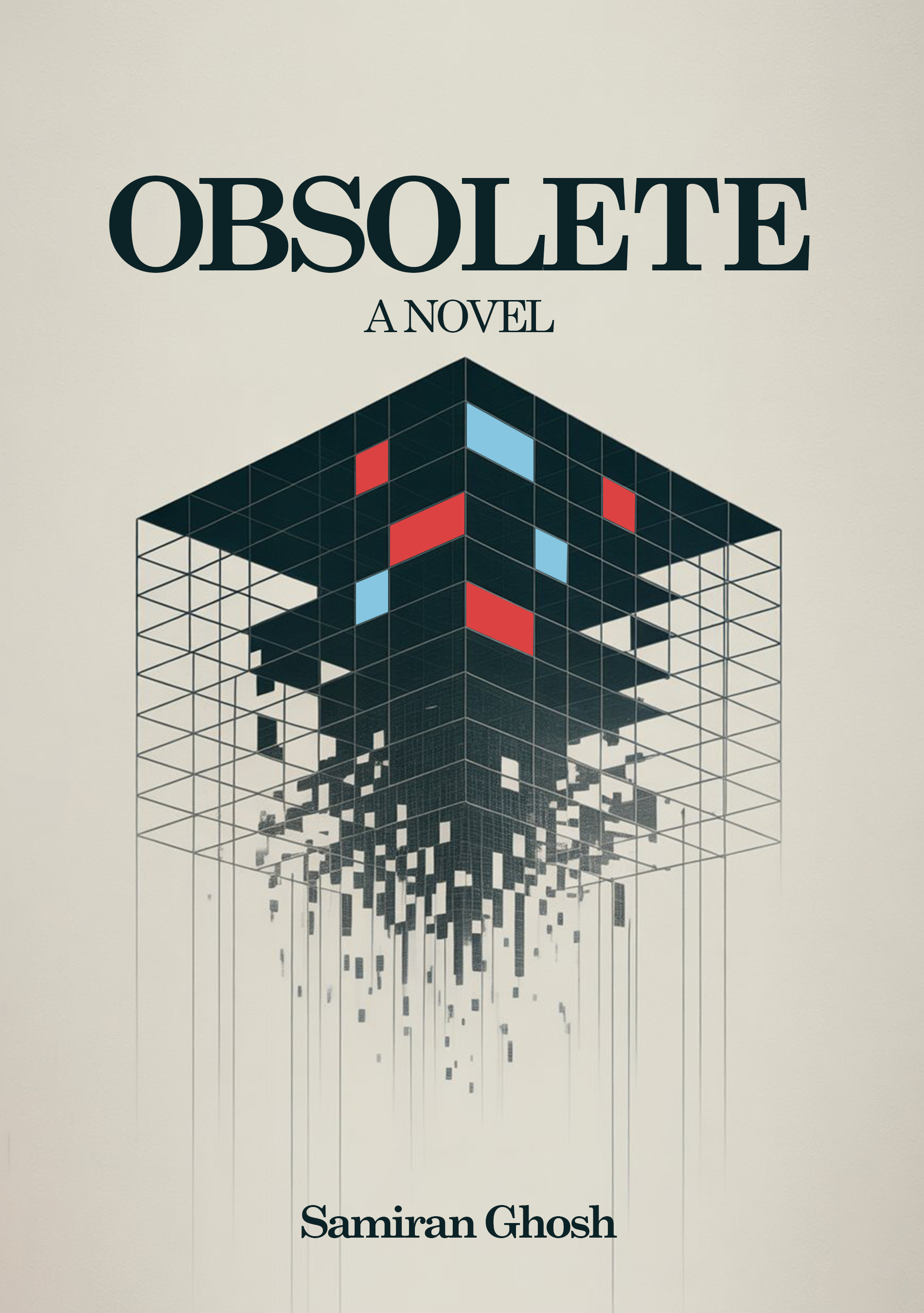
This is the idea the novel is built on.
Read Obsolete